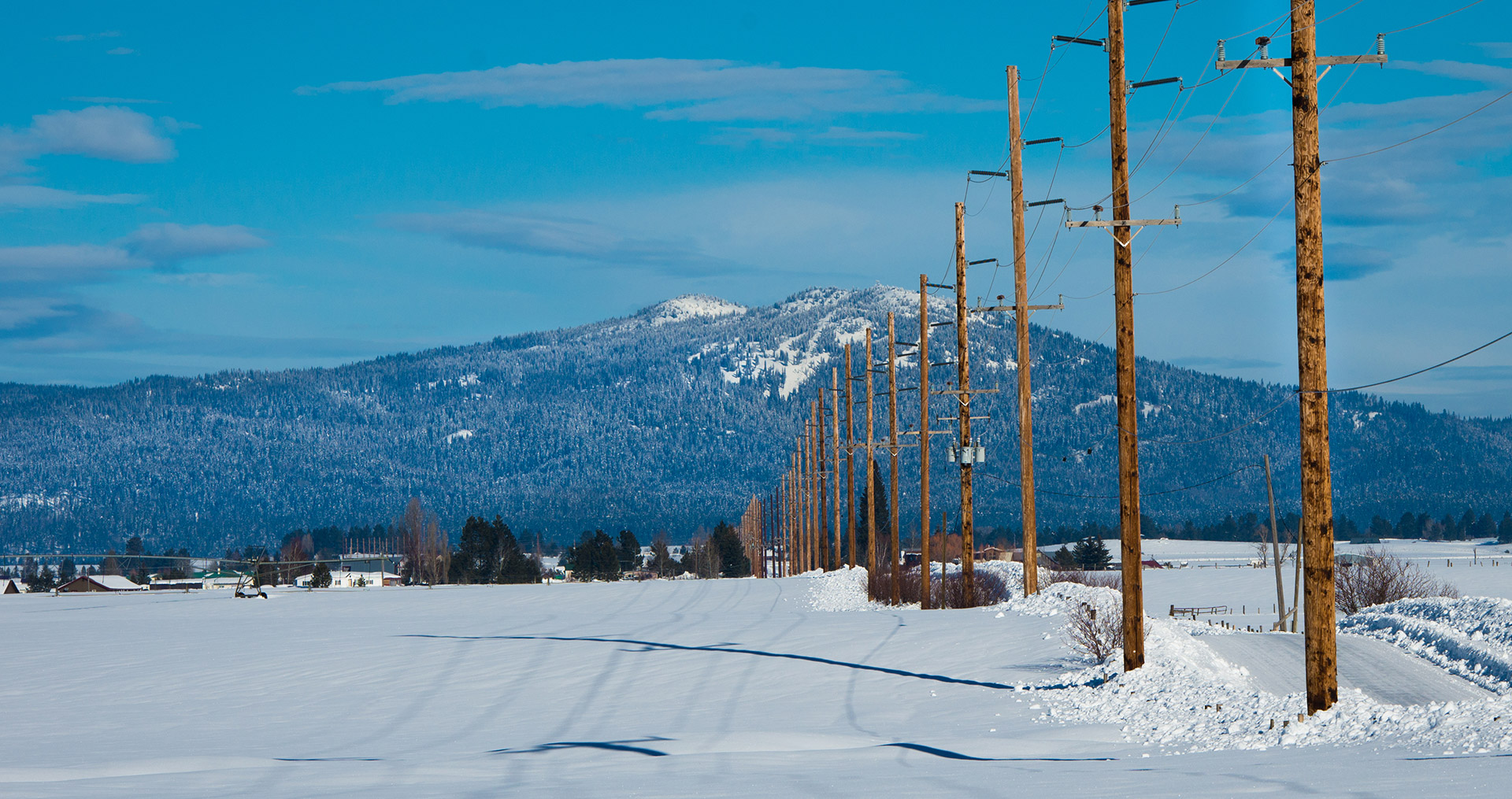
About the Project
Keeping energy costs affordable for our customers is one of our top priorities. SWIP-North will help Idaho Power meet growing energy demands and reduce costs for our customers by connecting Idaho Power to the desert Southwest’s low-cost energy resources.
SWIP-North is a 285-mile, 500-kilovolt (kV) transmission line that will run between eastern Nevada near Ely and Idaho Power’s Midpoint Substation near Jerome, Idaho. The line would create a direct connection to the desert Southwest’s energy market, where cooler winter temperatures reduce electricity use and the cost of energy.
Idaho Power’s role in SWIP-North is focused on importing energy, not exporting it. The project’s primary benefit is bringing lower-cost energy for our customers to heat their homes and businesses during the winter.
SWIP-North is the final segment of the larger Southwest Intertie Project (SWIP), which has been developed in phases over several decades. As energy use continues to grow across the region, completing this final segment has become increasingly important to meet current and future customer needs.
When complete, SWIP-North could deliver up to 500 megawatts to Idaho Power customers, enough to power more than 225,000 homes during high winter demand — or when opportunities to reduce costs for our customers arise — while strengthening reliability across the regional grid.
Background and Project Benefits
Keeping our customers’ energy costs down is a top priority for Idaho Power, and SWIP-North will help us do that.
This project would allow us to deliver electricity when and where it’s needed at a lower cost than building multiple new power plants. By bringing in energy from other regions, we can meet demand in a more cost-effective way, especially during times when energy prices are higher locally.
In December 2025, the Idaho Public Utilities Commission (IPUC) granted a Certificate of Public Convenience and Necessity for SWIP-North, confirming it provides clear value for customers. As part of that review, Commission staff identified several key reasons the project is needed:
Benefits
Reliable Power Supply
Provides a dependable way to bring energy into the system when it’s needed most.

Meets Growing Demand
Adds capacity to meet increasing energy needs for homes, farms, and businesses.

Lower Energy Costs
Delivers electricity at a lower cost than building new power plants.
Access to More Energy Options
Connects to broader energy markets to help keep costs down for customers.
Timeline and Current Status
SWIP-North has been in development for many years and is now moving from planning into construction.
Most of the early work—like siting, environmental review, and permitting—has already been completed. In Idaho, easements are in place along the project’s full 76-mile route, so no additional land is needed for this portion of the line.
With key approvals and agreements in place, the project is nearly construction-ready and moving forward on the following timeline:
- Mid-2026: Construction begins
- 2026–2029: Construction period, including transmission line installation and related infrastructure
- 2029: Expected in-service date, when the line begins delivering energy to customers
Frequently Asked Questions
How will SWIP-North help Idaho Power customers?
SWIP-North will help keep power costs down for Idaho homes, businesses, farms, and ranches as the demand for energy from Idaho Power customers continues to grow. SWIP-North will provide power by importing it from the southwestern U.S, which has as much as 13,000 megawatts of surplus power in the winter. That’s 3.5 times the amount of power our entire service area uses on our hottest summer day. With SWIP-North, we can purchase some of this energy — at low costs — when customers in the southwestern U.S. don’t need it as much.
How does SWIP-North benefit the Magic Valley?
SWIP-North will help keep energy affordable while meeting the growing energy needs of homes, farms, and businesses in the Magic Valley.
Transmission investment also brings long-term local benefits. The project will generate new property tax revenue for counties and schools.
Is Idaho Power building SWIP-North to send energy to California?
No. Idaho Power’s only ownership interest in the project is to import lower-cost energy and improve grid resiliency by expanding our connections to neighboring states and electric markets. The project will increase our ability to import power to keep customer costs low.
Idaho Power’s ownership in SWIP-North only allows us to import energy from south to north. Our ownership stake does not involve selling energy to California or anywhere else.
Why doesn’t Idaho Power just build more local energy resources?
We are. Our approach to reliably serving our growing customer needs is an “all of the above” approach. Idaho Power evaluates all available resources every two years, looking at cost, risk, and reliability to determine the best resource options for our customers. Our analysis identifies the SWIP-North project as a critical piece of our ability to continue delivering affordable energy to our customers.
Idaho Power is already adding natural gas, battery storage, and transmission lines to our system. We’ll continue adding resources in the coming years to ensure our customers can get the energy they need.
Idaho Power must meet the growing needs of our customers whether the energy is generated locally or in another state.
Why doesn’t Idaho Power build Gateway West instead of SWIP-North?
Gateway West is another important transmission project, but its purpose is different from SWIP-North’s. Gateway West will help Idaho Power move energy more efficiently and affordably inside the Mountain West.
SWIP-North, on the other hand, will bring energy into southern Idaho from outside the region so our customers can heat their homes and run their farms and businesses during the winter.
Regardless of the project, Idaho Power needs new high-voltage transmission lines that move energy within our service area and connect our customers to neighboring regions.
Other transmission projects have taken decades to build. Will this be any different?
SWIP-North is not a new project. It is the final segment of the larger Southwest Intertie Project, which began decades ago. Idaho Power was SWIP-North’s original developer in the 1990s. Much of the preliminary work required for siting and permitting SWIP-North has been completed.
Will SWIP-North take up farm ground?
Most of SWIP-North’s route in Idaho will parallel existing high-voltage transmission lines that cross remote, unfarmed land between Twin Falls and the Nevada border. In places where the line crosses agricultural land, we’ll work with farmers to minimize its impact on irrigation pivots and other farming activities.
Will Idaho Power own SWIP-North?
Idaho Power owns 250 megawatts (MW) of SWIP-North’s south-to-north capacity and has rights to use an additional 250 MW. Idaho Power’s ownership interest in SWIP-North is only to bring energy into Idaho, not to sell energy to California or elsewhere.
What public vetting of SWIP-North has occurred?
SWIP-North has undergone years of federal and local reviews, including public hearings and commenting in Twin Falls, Jerome, and Cassia counties. The project’s line corridors are approved for Cassia and Twin Falls counties.
In 2025, Jerome County approved a special-use permit for SWIP-North. The U.S. Bureau of Land Management has issued a Record of Decision, permitting the construction of SWIP-North across land the agency manages, following a full Environmental Impact Statement, which included extensive public outreach, tribal consultation, and agency coordination. Idaho Power’s Integrated Resource Plan has for many years identified SWIP-North as a cost-effective solution for improving winter reliability. The Idaho Public Utilities Commission (PUC) has adopted Idaho Power’s Integrated Resource Plan, which identifies SWIP-North as an important asset for meeting customer needs, following substantial public engagement and examination.
In December 2025, the Idaho Public Utilities Commission (IPUC) granted a Certificate of Public Convenience and Necessity for SWIP-North, confirming it provides clear value for customers.
Does SWIP-North enable Lava Ridge?
No. Idaho Power’s need for SWIP-North has nothing to do with Lava Ridge. Lava Ridge is not a project for Idaho Power or its customers.