
Small changes at home can make a difference. Explore these tips to find simple ways to save energy, improve comfort, and make your home more energy efficient year-round.
Cooling
Central A/C
Selecting and Installing Central A/C
- If your A/C needs ongoing, expensive repairs, or if it is more than 15 years old, you should consider buying a new one. A new higher-efficiency unit, when properly sized and installed, will cost less to operate.
- If you want to reduce your operating costs, look for an A/C that has a high Seasonal Energy Efficiency Ratio (SEER). A/C payback periods for homes can be very long in our service area, due to our short summers.
- Buying the correct-sized unit and installing it properly is critical to efficiency and comfort. Central A/Cs must be sized, installed and set up by a licensed HVAC contractor.
- For the highest efficiency, consider purchasing an A/C with variable-speed motors for the outdoor fan and compressor as well as the indoor air handler. These variable-capacity A/Cs are the most efficient available and can also provide increased comfort with reduced noise. These systems are usually more expensive and have lengthy payback periods due to our short summers.
- Ask a professional to inspect your duct system. Leaky, uninsulated or broken duct systems are common and reduce the effectiveness of your central A/C and heating system.
A/C Maintenance
- Routinely check your system’s filter during the cooling season. Replace (or clean if reusable) as needed. Dirty filters block normal airflow and significantly reduce a system’s efficiency and life.
- If you are experiencing a problem, have your A/C professionally serviced. Ask for a tune-up that includes a check of the refrigerant charge, cleaning of the coils and an inspection of your duct system.
Everyday A/C Tips
- Make sure there’s sufficient insulation throughout your home to help keep the heat out.
- Don’t crank the temperature down to try to cool your house faster. It will not cool your home any faster.
- Check your thermostat setting. Most people can be comfortable between 74-78 degrees.
- Consider installing a programmable thermostat to allow automatic adjustments for higher temperatures at night and when you are away without sacrificing comfort when you need it.
- Weather strip doors and caulk windows to prevent losing cool air to the outside and warm air from coming in.
Window Room A/C
Selecting and Installing Window Room A/C
- Shop for an ENERGY STAR certified unit. ENERGY STAR certified window room air conditioners use at least 10% less energy than models built to current minimum-mandated efficiencies and significantly less than older models.
- For optimal operation, install the unit in a north-facing window of the room you would like to cool, or in a shaded area.
- Consider a unit with controls, such as a digital readout for the thermostat setting and a built-in timer; both can help your unit use less energy. Some units will be able to be controlled through Alexa, Google or something similar.
- Bigger is not always better. Purchasing a unit that is too large is less efficient because of increased on/off cycling. Use the following chart to determine the size you need. For room A/C units, size is measured in British thermal units (BTU), an indication of cooling capacity.
| AREA TO BE COOLED (SQUARE FEET) | CAPACITY NEEDED (BTUS PER HOUR) |
| 100 – 150 | 5,000 |
| 150 – 250 | 6,000 |
| 250 – 300 | 7,000 |
| 300 – 350 | 8,000 |
| 350 – 400 | 9,000 |
| 400 – 450 | 10,000 |
| 450 – 550 | 12,000 |
| 500 – 700 | 14,000 |
| 700 – 1,000 | 18,000 |
Make adjustments for the following circumstances:
- If the room is heavily shaded, reduce the capacity by 10%.
- If the room is very sunny, increase the capacity by 10%.
- If more than two people regularly occupy the room, add 600 BTUs per person.
- If the unit is used in a kitchen, increase capacity by 4,000 BTUs.
Window Room A/C Maintenance
- Clean filter monthly when in use. Wash foam filters with soap and water and air dry.
- Vacuum the coil fins.
Everyday Window Room A/C Tips
Install a timer on the unit if you want the room cool when you get home. Check to see the timer is rated for the amperage and voltage of your unit.
Ceiling Fans
Selecting and Installing a Ceiling Fan
- ENERGY STAR certified ceiling fan/light combination units are 60% more efficient than conventional fan/light units. Savings come mostly from the lighting on the fan, so if your fan doesn’t include lighting, be sure to purchase an ENERGY STAR certified light kit.
- For summer and winter savings, buy a reversible fan that will create a down-draft in summer and reverse to circulate warmer air near the ceiling in winter.
- Install the fan with the blades at least seven feet above the floor, one foot below the ceiling and two feet from the nearest wall.
- Consider the size of the room and the size of the blades when selecting a ceiling fan. Multiple fans may be needed in rooms longer than 18 feet.
Everyday Tips for Ceiling Fans
If your ceiling fan has a reversible motor, reverse the fan during the winter months to produce a gentle updraft, which forces warm air near the ceiling down into the room.
Switch the fan and light off when you leave the room. Fans don’t cool rooms — they cool people. When circulating air passes over your skin, it picks up evaporating moisture, making you feel up to 4 degrees cooler.
Evaporate Cooler (also called Swamp Cooler)
Selecting and Installing an Evaporative Cooler
- Select a unit that has two or three blower speeds and a thermostat that automatically turns the cooler on and off.
- Sizing an evaporative cooler is less critical than sizing an air conditioner. The suggested guideline is about 3 cubic feet per minute (CFM) of airflow per square foot of area to be cooled.
- Place your evaporative cooler in a place free of outdoor obstructions, vents or combustion appliances. Make sure you can plumb a water supply pipe to it.
Evaporative Cooler Maintenance
- Have your cooler serviced twice a year — once before the cooling season and once during the summer.
- Have the unit professionally winterized before the winter season.
Everyday Tips for Your Evaporative Cooler
Expect to use about one-third of the electricity needed to operate an air conditioner of similar capacity. However, your cooler will use anywhere from 3 to 15 gallons of water per day.
Evaporative coolers can cool outdoor air by about 15 to 20 degrees. The lower the humidity, the more effective the cooling is. Cooled air from an evaporative cooler will add humidity to your home.
Leave at least one window open while operating an evaporative cooler. The cooler air will go to the rooms with airflow and push the existing air to the outside.
During moderate temperatures ( 85 degrees or lower), use just the evaporative cooler fan to draw cooler outdoor air into the home without using the cooling media to cool the air.
Heating
Everyday Tips
- Check your thermostat setting. To help save energy, we recommend 68 degrees when you are home and 58 degrees when you go to sleep or leave the house. Comfort and health should be included in your guide to setting the best temperature for you. For each degree you turn down the thermostat in the winter, you can save approximately 1 to 3% on heating costs. It is important to note that air source heat pumps operate better at a stable temperature setting. If you have an air source heat pump, you should try to keep a steady temperature setting. If you wish to program a setback schedule, limit it to two to three degrees.
- On sunny days, open the curtains and blinds to let the sun warm your home. At night, close the curtains to trap heat inside.
- Keep furniture and curtains away from heat registers and baseboard heaters.
Maintenance
- Have your heating equipment serviced annually by a professional.
- Replace your HVAC air filters before the heating season begins. Clean filters help ensure your system runs efficiently.
- Vacuum furnace air returns, registers, and baseboard heaters. Dust reduces the effectiveness of your system by blocking airflow.
- Duct system joints can come loose, causing you to lose warm air into your attic or crawl space or draw hot air into the ducts during the summer. Call a professional to help inspect and repair your system. Note: If you choose to fix duct leaks yourself, use duct mastic paste, never duct tape.
- Inspect your home for air leaks. Consider caulking windows, adding weather stripping to doors, and sealing other leaks in an effort to keep the heat inside your home in the winter and the heat out during the summer.
Selecting/Installing
- Look for an ENERGY STAR®-certified heat pump, typically 20% more efficient than other systems on the market. An ENERGY STAR system may be more expensive to buy but will save you money over the life of the product.
- Install a programmable thermostat and set the temperature to match your schedule. Based on your preferences, the thermostat can automatically turn your heat down while you sleep or are away from home. If you have a heat pump or are installing a new one, be sure to purchase a thermostat specifically designed for heat pumps. For air source heat pumps, limit setback temperatures two to three degrees to avoid the thermostat’s potential use of supplemental electric heat to quickly warm up the home. Electric supplemental heat is about twice as expensive compared to the heat pump’s heat.
- Insulate ductwork if it runs through an unconditioned portion of your house (i.e. crawlspace, attic).
Home Electronics
Surprisingly, up to 75% of all electricity used by home electronics is while they are in standby mode. Most people assume when they turn off their equipment it is completely off. Actually, it is in the standby mode – the mode necessary for the use of remote controls, clocks, channel memory and other features.
According to energy.gov, standby power accounts for 5 to 10% of residential energy use.
Everyday Tips
- Turn off entertainment systems and computer equipment when not in use. Minimize energy use when electronic devices are in standby mode by enabling power save settings.
- To eliminate energy use when devices are in standby mode, plug them into a smart strip or power strip with on/off capabilities
- Look for the ENERGY STAR® label when selecting home electronics. ENERGY STAR-certified products use less energy than conventional models while still providing the features consumers want.
Insulation and Weatherization
Tips for Staying Comfortable
- Caulk and weather-strip doors and windows that leak air.
- Seal air leaks between your living space and your attic and/or crawl space. Leaks are common around plumbing and vents, heating ducts, light fixtures and wires. Be sure fixtures and wires are designed for direct insulation contact.
- Install wall plate insulation gaskets behind outlet and switch plates on exterior walls (turn off the power before installing gaskets).
- Make sure your attic and crawl space have adequate ventilation to vent out moisture and summer heat.
Selecting/Installing
- The effectiveness of insulation is noted as an R-value, a measure of the material’s resistance to heat transfer. Higher R-values provide greater insulating value. R-values are additive – the more you add, the higher the R-value will be.
- Use a ruler to check the existing insulation levels in your attic, ceilings, exterior walls, floors and crawl spaces.
| Cellulose | Blown-in Fiberglass | Fiberglass Batting | |||
|---|---|---|---|---|---|
| Inches | R-Value | Inches | R-Value | Inches | R-Value |
| 5.29 | R-19 | 8.0 | R-19 | 6.00 | R-19 |
| 8.36 | R-30 | 12.25 | R-30 | 9.75 | R-30 |
| 10.59 | R-38 | 15.5 | R-38 | 12.26 | R-38 |
| 12.26 | R-44 | 17.7 | R-44 | 14.25 | R-44 |
| 13.37 | R-49 | 19.50 | R-49 | 15.5 | R-49 |
- Add new insulation to the existing insulation to increase the R-value using the following guidelines:
| House Area | Standard | Enhanced |
|---|---|---|
| Attic/Ceiling | R-49 | R-60 |
| Floor (over unconditioned space) | R-30 | R-38+ |
| Wall | R-20 | R-22+ |
- Use higher density insulation that has a higher R-value per inch of insulation in cathedral ceilings and in exterior walls.
Kitchen Appliances
Everyday Tips
- Defrost foods before baking or roasting to save on cooking time. Defrosting foods in the refrigerator is ideal – the cooling frozen air goes into refrigeration rather than escaping into your kitchen.
- Rely on your oven thermostat and recipe time rather than checking on your cooking food. Opening the oven door can lose up to 20% of the heat.
- Bake in glass or ceramic pans, allowing you to bake at a temperature 25 degrees lower than your recipe recommends.
- Use lids. Foods in covered cookware retain heat better and will cook at a lower temperature on your range.
- Use flat bottom pans to ensure efficient heat transfer from the burner to the pan. Match the size of your pot or pan to the size of the burner.
- Consider using a microwave or pressure-cooker. By cooking food at a higher temperature and pressure, cooking time is reduced dramatically and energy use is cut by at least 50%.
Maintenance
- Check to make sure the gasket on your oven door is keeping the door shut tightly. Adjust or replace the gasket if it is not providing a good seal.
- Keep the burners on your range clean, allowing for more efficient heat transfer. Also be sure the reflective pans under the element are clean and shiny. A shiny surface reflects heat more effectively.
- Clean the inside walls of your microwave to improve efficiency.
Selecting/Installing
- Look for an oven with increased insulation and a good gasket to ensure a tight-fitting door. Self-cleaning ovens typically come with more insulation and are a good bet, as long as you don’t use the self-cleaning feature too often.
- Consider the size of your oven when shopping. A small oven may fit your needs as well as a larger one that requires more energy.
- If you like to check on your food as it bakes, buy an oven with a window and light so you won’t have to open the door during cooking.
- Consider an energy efficient induction stove. Induction stoves use electromagnetic energy to directly heat compatible (ferromagnetic) pots and pans. Benefits include precise temperature control, faster cooking times and they are 10% more efficient than traditional electric stoves and up to three times more efficient than gas stoves. Induction cooktops won’t get hot without a pot on them, reducing risk of burns.
Lighting
General Information
What is ENERGY STAR®?
ENERGY STAR is a government program sponsored by the U.S. Environmental Protection Agency and the U.S. Department of Energy. ENERGY STAR helps consumers identify energy efficient products. Look for the ENERGY STAR designation when purchasing bulbs, appliances, home electronics and heating and cooling equipment.
Why choose ENERGY STAR certified bulbs?
ENERGY STAR certified bulbs save money, energy and time. They use nearly 75% less energy than incandescent bulbs and last up to 10 times longer while providing the same amount of light.
What is an LED?
LEDs are small light sources that become illuminated by the movement of electrons through a semiconductor material. Many LED products are now found on store shelves. For the highest quality, buy bulbs with the ENERGY STAR logo.
What is a CFL?
CFLs come in many shapes and sizes to fit in common household light fixtures. CFLs are different from tube fluorescents. For the highest quality, buy bulbs with the ENERGY STAR logo.
What is a halogen incandescent?
Halogen bulbs are a type of incandescent lamp that uses a combination of halogen and tungsten filaments. They are up to 25% more efficient than traditional incandescent bulbs.
Buying ENERGY STAR Bulbs
Will ENERGY STAR certified bulbs fit into my existing fixtures?
ENERGY STAR bulbs can replace standard incandescent bulbs in almost any fixture. Specialty bulbs include globe lamps for your bathroom vanity and chandelier bulbs or lamps for recessed downlights. Check the packaging of the bulb to ensure it’s meant for your intended purpose.
Can I use ENERGY STAR bulbs with outdoor fixtures?
Certain bulbs are appropriate for outdoor use. Bulb packaging provides information on temperature ratings and outdoor uses.
What is the warranty on ENERGY STAR certified bulbs?
All ENERGY STAR certified bulbs come with a warranty. Refer to the bulb packaging for details. Warranties range from two to three years for residential use. Keep your receipt in case your bulb does not last as long as advertised.
Can I really save as much as the package says by installing an ENERGY STAR certified bulb?
While you will save energy by using an ENERGY STAR light bulb over an incandescent, read the packaging carefully to determine how the advertised savings were calculated. Rates, time frames and number of bulbs used to calculate the savings can vary. Most manufacturers use an electric rate based on a national average. Keep in mind that Idaho Power’s residential rate is generally lower than the national average. Calculations on a multi-pack may group the savings into one larger number that adds the savings from all the bulbs. Additionally, savings may be reported as yearly savings or over the life of the bulb.
What is a watt?
A watt measures how much energy a bulb uses. Although we associate higher wattage bulbs with greater light output, watts are not technically a measure of brightness. However, for replacing incandescent bulbs, watt equivalents can help narrow the search for the right bulb. The packaging for most ENERGY STAR bulbs provides the wattage of the bulb and the incandescent equivalent.
What is a lumen?
A lumen is the measurement of light output. The higher the lumens, the brighter the bulb. Two bulbs that use 15 watts can range in brightness. A 13-watt bulb with a brightness of 800 lumens puts out more light for the same energy as a 13-watt bulb with a brightness of 750 lumens.
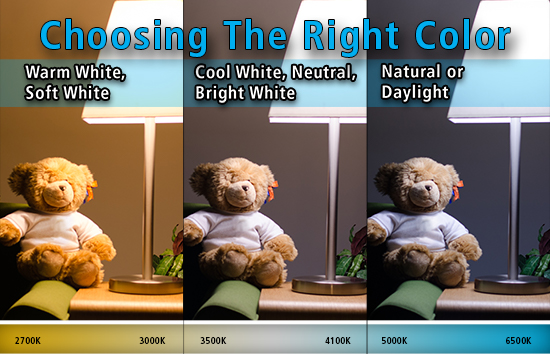
Why are bulbs labeled with different terms like soft white, bright white and daylight?
There are many shades of white light measured in degrees of Kelvin (K). Warm colors work well in area lighting or mood lighting and have lower Kelvin temperatures. Use cooler lights with a higher Kelvin temperature, such as “daylight” or “bright white” for a bluer color. Cool colors work well for tasks like reading.
Using ENERGY STAR Bulbs
Can ENERGY STAR certified bulbs be used with a dimmer switch?
Yes. Only certain bulbs are made to work on dimmers. The packaging information identifies whether the bulb is for use in a dimmable fixture. Dimming a bulb not designed to work with a dimmer switch may shorten its life or impact its performance.
Is it true that CFL bulbs contain mercury?
CFLs contain a small amount of mercury sealed within the glass tubing, an average of 5 milligrams. By comparison, the average home thermometer contains 500 milligrams of mercury.
What should I do with a CFL when it burns out?
Fluorescent light bulbs, including CFLs, contain a small amount of mercury. Idaho Power encourages safe handling and proper disposal of fluorescent bulbs. Please contact your local landfill or solid waste collection company for information on household hazardous waste collection programs or special handling requirements. Learn more at http://epa.gov/cfl/.
My bulb burned out early. Why?
- Was it an ENERGY STAR bulb? Bulbs must meet stricter quality control guidelines to receive the ENERGY STAR designation. If the bulb was an ENERGY STAR bulb, report the failure through www.energystar.gov.
- Was it the right bulb for the application? Bulbs used with dimmer switches, three-way switches, motion sensors or outdoors must be rated for that use.
- Was the bulb placed in an enclosed fixture? Before using a bulb in an enclosed fixture, consult the product packaging. Bulbs not designed for totally enclosed fixtures will typically carry a disclaimer indicating they are not intended for this type of use. Because enclosed fixtures do not allow air to circulate around the lamp, heat builds up, which can lead to performance issues.
Where can I find additional information about ENERGY STAR?
See additional information at www.energystar.gov.
New Homes
Selecting the Best Home
- Look for the ENERGY STAR® logo when purchasing a site-built home. Synonymous with energy savings, ENERGY STAR is a national mark for products from appliances to lighting and now includes new homes. ENERGY STAR builders are committed to incorporating energy-efficient features in your home.
Features to Discuss with Your Builder or Salesperson
- Select a high-efficiency furnace, water heater and A/C unit. High-efficiency equipment buys you more heating and cooling per dollar. Be sure to discuss the size of the equipment appropriate for your home and lifestyle. Equipment can often be downsized when the home is built to energy-efficient standards.
- Have your ductwork sealed and insulated. More than 80% of new homes have ducts that leak. When ducts are under pressure during heating and cooling, a 1-inch duct hole is equivalent to a hole in the wall that is 25 times as large, leading to significant energy loss.
- Keep return ducts out of the attic. Hot Idaho and Oregon summers can turn attics into virtual ovens, with temperatures exceeding 140 degrees on the hottest days. When return ducts are routed through these attics, instead of the walls or crawlspace, the air heats up and makes it much more difficult for the air conditioning unit to keep your home cool.
- Pay attention to insulation levels in the underfloor, attic and walls. R-values are used to rate insulation (higher numbers provide more insulation). Code requires R30 in the floor of site-built homes, but R38 is recommended by ENERGY STAR. Code requires R38 in the attic, sufficient for a home, but going to R44 is cheap relative to the potential savings on your cooling bill. For wall insulation, ENERGY STAR homes include R19 or better. In addition to the R-value, make sure the insulation is properly installed. Gaps or compression can reduce its effectiveness.
- Select ENERGY STAR windows, now available at moderate prices. Don’t settle for a window with a U-value greater than 0.30, look for low-e coatings that keep rooms cooler in summer and warmer in winter and specify windows with a lower Solar Heat Gain Coefficient (.30 or less). Note: U-values are the inverse of R-values, so the smaller the number, the more efficient the window.
- Efficiency improvements such as these necessitate improved ventilation systems. These systems will improve comfort and air quality.
Seasonal Tips
With each new season, comes new ways to save energy! Use the tips below to keep an energy efficient home year-round.
Winter
- Use natural heat. Open curtains during the day to let sunlight naturally warm your home, and close them at night to retain heat.
- Set your water heater temperature. Set the temperature so water at the tap is 120°F.
- Weatherstrip and caulk. Seal around doors and windows to reduce drafts. Fixing air leaks is one of the cheapest and easiest ways to improve comfort and reduce energy use.
- Install door sweeps. Add door sweeps to the bottom of exterior doors to block cold drafts.
- Install a smart or programmable thermostat. Easily adjust your home’s temperature based on your schedule. Visit idahopower.com/heatingcooling to see if you qualify for a $50 smart thermostat incentive.
- Use energy-efficient heating. Consider an energy-efficient furnace or heat pump when it’s time to upgrade. Regular maintenance of your heating system can also improve efficiency.
- Replace your HVAC system air filters. Dirty filters block necessary airflow and can significantly reduce the system’s efficiency and life.
Spring
- Replace your HVAC system air fi lters. Dirty fi lters block necessary airfl ow and can signifi cantly reduce the system’s efficiency and life.
- Check your thermostat settings and adjust for a spring/summer schedule. Program your thermostat to allow automatic adjustments. Visit our website to see if you qualify for a $50 smart thermostat incentive — idahopower.com/heatingcooling.
- Clear leaves and debris off the outside A/C or heat pump unit. This allows proper air flow for your unit to work more effectively.
- Use LED bulbs with dusk-to-dawn sensors for outside lighting. You’ll never forget to turn the lights off again.
- Seal air leaks around windows and doors by caulking, weatherstripping, or adjusting hardware for a better fit. Fixing air leaks is a cheap and easy way to improve comfort and reduce energy use.
- Plant shade trees to shield west-facing windows. According to the U.S. Department of Energy, well-placed shade trees can block the sun’s rays and reduce energy used for summer cooling by 15% or more.
- Use cold water for laundry. Wash clothes in cold water to save on water heating costs.
Summer
- Adjust your thermostat setting to align with your comfort and budget. In the warmer months, each degree you raise your thermostat can reduce cooling costs by 1 to 3%.
- Replace your air filter. Dirty and clogged air filters prevent airflow, which can make your HVAC system work harder. Replacing your dirty filter can lower your A/C’s energy usage by 5 to 15%.
- Use ceiling fans, floor fans, and box fans instead of reducing the A/C temperature. Fans can make you feel 4 degrees cooler and help maintain comfort in occupied rooms. Remember — fans cool people not rooms — so switch the fans off when the room is unoccupied.
- Close windows and blinds during the day or when you’re away, especially on the east- and west-facing sides, to keep the hot sun out. If safe, open your windows at night or in the morning to let in cooler air.
- Ditch the oven and opt for smaller appliances. Using your oven can add extra heat to your house. Try cooking more of your meals with a microwave, crockpot, pressure cooker, or grilling outdoors!
Fall
- Replace your HVAC air filters before the heating season begins. Clean filters help ensure your system runs efficiently.
- Inspect and clean HVAC air vents and registers to ensure they’re unobstructed. This helps maintain efficient air flow.
- Check for air leaks around outside doors and windows. If you can feel a draft or see daylight, caulk, add weatherstripping, or adjust hardware for a better fit.
- Use sunlight for natural heat. Open curtains or blinds on south-facing windows during the day to allow sunlight to naturally heat your home. Close them at night to reduce the chill and keep the warmth inside.
- Try setting your thermostat to 68°F when you’re home and awake. This maintains a good balance between comfort and energy efficiency. When you’re asleep or away, lowering the thermostat by 7–10°F can help you save up to 10% annually on heating costs. If you have a heat pump, avoid lowering your thermostat more than 1 to 2 degrees overnight. Larger temperature setbacks may trigger backup heat, which uses more energy.
Washer and Dryer
Everyday Tips
- Wash with cold water whenever possible, as water heating accounts for 90% of the energy used by washing machines. Use cold-water detergent and save the hot-water cycle for special loads such as cloth diapers or stained work clothes. Just switching from hot to warm water can cut energy use in half.
- Always use cold water to rinse, since the rinse temperature has no effect on cleaning.
- Use a drying rack or clothesline instead of the dryer – even taking clothes out a few minutes early to “finish” on a rack will save.
- Plan to wash and dry full loads of laundry to save on energy and water.
- Dry consecutive loads to take advantage of already-warm air in the dryer, and don’t add wet clothes to a partially-dried load.
- Dry towels and heavy cottons in separate loads from lightweight fabrics.
- Use the “air fluff” cycle to reduce the need for ironing — another big energy-user.
Maintenance
- Check the dryer’s exhaust vent to ensure the outside hood opens and closes freely. If the “flapper” on the hood stays open, outdoor air can blow into your home through the dryer and increase heating and cooling costs.
- Clean the dryer’s lint filter after each load to improve air circulation.
Selecting/Installing
- When shopping for a new washer or dryer, select a model with the ENERGY STAR® label. ENERGY STAR certified washers use about one-third the energy and about half the water used by regular washers. ENERGY STAR certified washers remove more water from your clothes during the spin cycle, saving you money on drying as well.
- Look for models with the following water and energy-saving features:
- Automated moisture sensors (or “auto dry”)
- “Suds saver” feature
- Water level controls
- Load size controls
- Spin cycle adjustment
- When installing your dryer, vent the exhaust system to the outside of your home. This will prevent moisture from collecting inside the house.
Water Heating
Everyday Tips
- Set the temperature so that water at the tap is 120°F degrees (usually between the low and medium setting).
- Install high-efficiency showerheads and sink aerators to cut down on the amount of hot water needed throughout your home. Older showerheads often use 4 to 5 gallons per minute, while newer ones range from 1.5 to 2.5 gallons per minute. You’ll save water and energy!
- Insulate your water heater with a hot water heater blanket if your water heater is warm to the touch. Be sure to follow the instructions, leaving thermostats and valves accessible.
- If your water heater is located in a place that is not heated in the winter, insulate both the hot and cold pipes connected to your water heater. Insulating the hot line reduces heat loss and helps deliver hot water more efficiently. Insulating the cold line prevents condensation and keeps the incoming water cooler, reducing the amount of energy your water heater needs to warm it up.
- If you’re going on vacation, either turn down the water heater or turn it off altogether to save electricity while you’re gone. If you turn it off, it will take a few hours hours to reheat once you turn it back on.
Maintenance
- Promptly repair leaky faucets. If you have a hot water leak, it’s costing you money in water and energy.
- Every six to 12 months, drain a small bucket of water from the valve at the bottom of your water heater to flush out sediment that can reduce efficiency. Follow your manufacturer’s instructions, and open a hot water faucet while draining to help stir and remove sediment. Remember to turn off the faucet when you’re done.
Selecting/Installing
- Consider a heat pump water heater. These electric water heaters are twice as efficient as standard electric water heaters.
- Consider cost of ownership when buying a water heater. The EnergyGuide label includes an estimated annual operating cost. Models that cost less to purchase often cost more to operate over the life of the product.
- A water heater typically has a life span of 10 to 15 years. Consider asking a plumber about the useful life left in your water heater and replace it before it breaks rather than as a result of an untimely failure. If you plan ahead, you are more likely to get the right water heater for your needs. Follow the manufacturer’s guidance to periodically change the anode rod to increase the life of the tank.
Windows, Doors, and Skylights
Everyday Tips
- In the winter, open curtains to allow sunlight to warm your home. In the summer, close curtains (especially on the west-facing windows) in the afternoon to keep the house cool.
- Shut exterior doors completely. If it’s closed but not latched, it can let heat inside during the summer and outside in the winter.
Enhancing Existing Windows and Doors
- Install exterior overhangs or awnings in order to keep the strongest rays of the hot summer sun from entering.
- Use your landscaping to keep your home warm in the winter and cool in the summer. Well-placed deciduous trees on the west and northwest side of the house can reduce cooling costs in the summer. Planting trees on the south side can block warming rays that would help heat your home in the winter.
- Seal air leaks around windows using either rope caulk or a caulking gun.
- Install storm windows. Options include vinyl film, rigid plastic or combination storm windows. Consult your local hardware store or window dealer for the best option.
- Install weather stripping around exterior door frames to ensure a tight seal when the door is closed.
- Install door sweeps at the bottom of the door to reduce airflow.
- Consider installing a storm door in addition to your exterior doors.
Selecting/Installing
- Look for double-pane windows with a low-e (low emissivity) coating, insulated sashes, spectrally selective coatings and an inert gas filling. Look for a U-value of 0.30 or less and a Solar Heat Gain Coefficient (SHGC) of 0.30 or less. Lower numbers are better. Consult the National Fenestration Rating Council label (NFRC) to understand the performance features of windows and skylights.