
Want to know how much energy your TV, computer or kitchen appliance uses? Idaho Power works with local libraries in Idaho to help you find out.
Borrow an Energy Efficiency Kit at your local public library. The kit includes a Kill A Watt meter, easy instructions and energy-saving tips to help you find simple ways to save energy and money at home.
Note: Program availability, eligibility requirements, and terms and conditions apply.
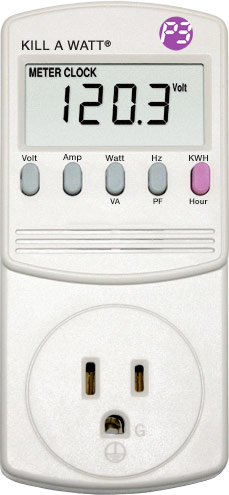
How does the meter work?
Plug the Kill A Watt meter into a standard, three-prong outlet. Then plug your appliance into the meter. The meter shows how much power the appliance uses, which can help you decide whether to unplug it when it is not in use or replace it with a more efficient model.
For example, you can test a TV that is often left on when no one is watching. Measure how much power it uses, then use your electric rate to estimate how much you could save by turning it off.
Kill A Watt™ Calculator
For directions on Kill A Watt meter use, please refer to the instruction brochure included with the meter.
- Select the appliance you are measuring.
- Enter the meter value for the appliance you are measuring and select the appropriate value (watts or kWh).
- Enter one of the following:
- Measuring watts? Enter the hours used per day/week/month (select one). Note: 20 minutes = 0.33 hours, etc.
- Measuring kWh? Enter the “Hour” reading from the meter.
- Calculator will calculate the kWh per month used and the estimated cost per month for the use of the selected appliance.
Terms and Conditions
Idaho Power Company (“Idaho Power”) is not the manufacturer of the Kill A Watt meter. Idaho Power hereby disclaims any and all implied or express warranties (including, but not limited to, implied warranties of merchantability or fitness for a particular purpose) and shall not be responsible for any representation or promise with respect to the Kill A Watt meter or its use, operation, improper application or malfunction.
In no event shall Idaho Power be responsible for any direct, special, incidental, consequential or indirect damages of any nature or kind, whether in contract, warranty, tort, negligence, strict liability, or under any indemnification provision or otherwise related to the Kill A Watt meter or its use, operation, improper application or malfunction.