Idaho Power’s system of 17 hydroelectric power plants is located on
the Snake River and its tributaries. It has a combined nameplate generating capacity of 1,988,615 kilowatts.
American Falls Dam
The original American Falls Power Plant was built in 1902, acquired by Idaho Power
in 1916 and rebuilt by the U.S. Bureau of Reclamation in 1927.
Idaho Power added a power plant in 1976 when the Bureau again rebuilt the dam.
It has three generators with a total nameplate generating capacity of 112,420 kilowatts. The dam is used primarily for irrigation and secondarily for power production and recreation opportunities.
It's located at river mile 714.7.
Bliss Power Plant
Bliss Power Plant was completed in 1950 and includes a powerhouse
and three generators with a total nameplate generating capacity of 80,000 kilowatts. It's located at river mile 560.3. Idaho Power is in the process of relicensing the plant under the authority of the Federal Energy Regulatory Commission (FERC).
C. J. Strike Power Plant
Named after former Idaho Power President C.J. Strike, the plant was completed in 1952. Located on the Snake River southwest of Mountain Home, Idaho, at river mile 494.0, the plant's three generators have a total nameplate generating capacity of 89,000 kilowatts.
Idaho Power is currently in the process of relicensing the plant under the authority of the FERC.
Clear Lake Power Plant
This is Idaho Powers smallest power generator, with a nameplate generating capacity of 2,400 kilowatts. We built the plant in 1937 as part of a development phase during the Great Depression. It is located on the Snake River near Buhl, Idaho, at river mile 593.0. Underground springs supply the water used to generate power.
Cascade Power Plant
Originally built in 1926 on a Payette River diversion by the U.S. Bureau of Reclamation, a new plant was completed in 1984 that uses the dams full power production potential. The plant has two generators with a total name plate generating capacity of 14,000 kilowatts. Generation is tied to seasonal reservoir releases for irrigation controlled by the Bureau of
Reclamation. The Idaho Department of Parks and Recreation operates the recreational facilities at Cascade reservoir.
Brownlee Dam
Our largest project with five generators rated at 728,000 kilowatts, it was completed in 1959 and is the most upstream of the three dams in the Hells Canyon Complex. It's located at river mile 285.0. Today the three-dam complex supplies power, provides flood control, and provides recreation opportunities to the
region. Brownlee Dam and Reservoir's name is derived from nearby Brownlee Creek, most likely named after the Brownlee family who settled the area in 1862 and operated a ferry across the Snake during the late 1800s.
Oxbow Dam
Oxbow takes its name from a three-mile bend in the Snake River.
Early settlers said this part of the river resembled the U-shaped collar around an oxs
neck. Located 13 miles downstream of Brownlee Dam, Oxbow is one of the worlds most unusual dam sites. Completed in 1961, it was the second dam of the Hells Canyon Project and is rated at 220,000 kilowatts.
Hells Canyon Dam
Located 21 miles downstream of Oxbow Dam, Hells Canyon Dam is the third and last project in the Hells Canyon Project. It began generating electricity in 1967 and has a nameplate generating capacity of 450,000 kilowatts.
Lower Malad and Upper Malad Power Plants
The Beaver River Power Company built the original Lower Malad Power Plant in 1911 on the Malad River. Idaho Power acquired the plant in 1916. Today the Lower Malad Power Plant is located on the Snake River at river mile 571.2. It diverts water from the Malad River to a powerhouse equipped with one generator rated at 15,000 kilowatts.
The Upper Malad and Lower Malad Power Plants were re-developed after World War II. Located near Hagerman, Idaho, the Upper Malad Power Plant has a name plate generating capacity of 9,000 kilowatts. It includes a diversion dam at river mile 2.1 on the Malad River, a concrete gravity structure, and a powerhouse with one generator.
Idaho Power is relicensing the Upper and Lower Malad Power Plants under the authority of the Federal Energy Regulatory Commission.
Milner Dam
Milner Power Plant was constructed in 1992 as part of a rebuilding of the Milner Dam. Owned by Milner Dam, Inc., the dam was built in 1905 and rebuilt in 1992 as part of the Milner Power Plant project. Its primary purpose is irrigation with power production a by-product. It's located at river mile
639.1. Milner Power Plant's two main generators have a nameplate generating capacity of 59,448 kilowatts. A small 833-kilowatt generating unit is located at the dam to use the minimum stream flows that are passed to maintain a flow in the main river channel. Milner Dam is operated primarily for irrigation purposes and secondarily for power production and recreation opportunities.
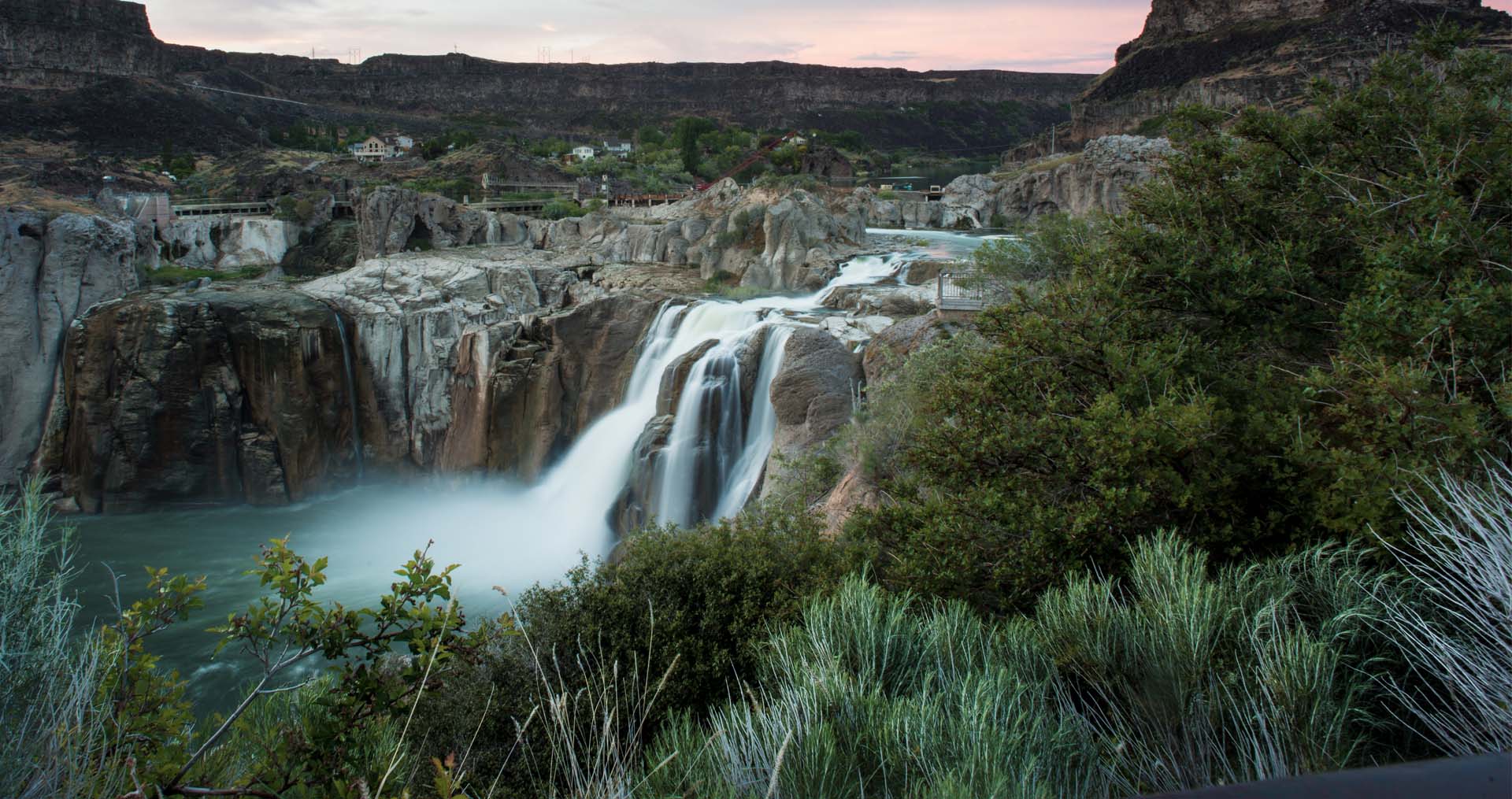
Shoshone Falls Power Plant
Built in 1907 it was the first power plant in Idaho's Magic Valley. It was acquired by Idaho Power in 1916 and rebuilt in 1921.
Shoshone Falls Power Plant is located on the Snake River near Twin Falls, Idaho, at river mile 614.7 . The plant has a name plate generating capacity of 12,500 kilowatts. It includes a diversion dam and a powerhouse with three generators.
Idaho Power is currently in the process of relicensing the plant under the authority of the FERC.
Swan Falls Power Plant
This was the first power plant built on the Snake River. Located near Kuna, Idaho, at river mile 457.7, the original plant was built in 1901 to supply electricity to nearby mines. Idaho Power acquired the plant in 1916.
Originally
there were 10 generators rated at 10,400 kilowatts which were decommissioned in 1994 along with
the old powerhouse. It is now a historic display.
A new powerhouse with two generating units called pit turbines, was completed in 1994 which increased the projects name plate generating capacity to 25,547 kilowatts.
Thousand Springs
The Thousand Springs site had many developers and owners but it wasnt until 1912 that power was first generated at the site by the Thousand Springs Power Company. It's located at river mile 584.7. Idaho Power acquired the site in 1916 and updated the plant in 1921. The current plant includes diversion structures and a powerhouse with three generators with a total nameplate generating capacity of 8,000 kilowatts.
Twin Falls Power Plant
Idaho Power built the original plant in 1935 and updated it in 1995 with a diversion structure and two powerhouses with a total nameplate generating capacity of 52,737 kilowatts. It's located at river mile 617.4.
Lower Salmon Falls
Built in 1910 by the Greater Shoshone and Twin Falls Water Power Company, Idaho Power acquired the plant in 1916 and rebuilt it in 1949.
The plant has a total nameplate generating capacity of 54,300 kilowatts and
includes a dam and powerhouse with four generators. It's located at river mile
573.0.
Idaho Power is currently in the process of relicensing the plant under the authority of the FERC.
Upper Salmon Power Plant
This is one project with two power plants-Upper Salmon A and B. Idaho Power built Upper Salmon A in 1937. The plant includes a diversion structure and two generators with a total nameplate generating capacity of 70,000 kilowatts. It's located at river mile 580.8.
Upper Salmon B Power Plant is located upstream from Upper Salmon A Power Plant at river mile 579.6. Built in 1947, Upper Salmon B is comprised of a diversion structure and two generators with a total name plate generating capacity of 39,000 kilowatts.